
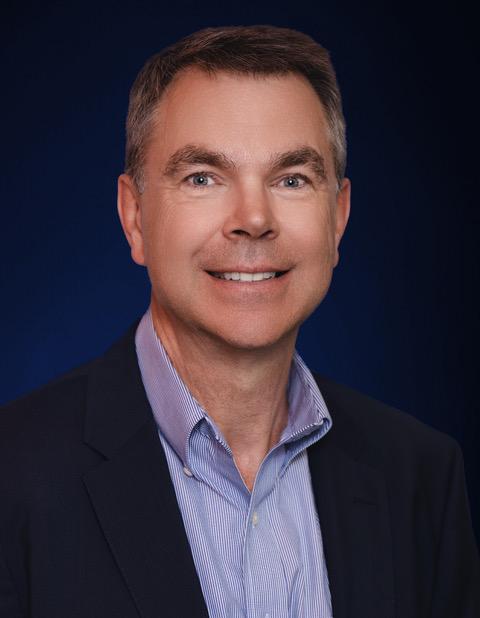
LEXINGTON, Ky. -- Dr. Louis Hempel, M.D., exemplifies University of Kentucky College of Arts and Sciences alumni who are pitching in to guide and inspire current UK undergraduates toward the medical professions. Hempel graduated from UK in 1982 with a bachelor’s degree in general studies in 1982 and an M.D. from the University of Louisville in 1987. He has been working for many years with the Children’s Medical Group in Atlanta and as associate clinical professor of pediatrics in the Augusta University/University of Georgia Medical Partnership.
How did you start mentoring pre-med UK students?’
After coming to Atlanta a couple of times and realizing that she could get me more involved, Dean Ana Franco-Watkins, Ph.D., had a private dinner with my wife and me. We were both blown away with the enthusiasm that Dean Franco-Watkins brings to the College of Arts and Sciences. From that meeting, I was invited to a private tour of the UK campus, where I met students Ryan Brennan and Bhavya Vyas. Dean Franco-Watkins then connected me to Mark Prendergast, Ph.D., who invited me to talk to his class of pre-medical professional students in the fall of 2024. During that campus visit I became familiar with the UK NeuroCATS organization. This club is engaging Kentucky students from elementary school forward in hands-on neuroscience learning, which sometimes includes looking at real human brains.
What an ingenious way to begin inspiring the next generation of medical scientists and medical health professionals. As a follow-up to my visit to the classroom, it was an honor to be invited to the NeuroCATS Gala in 2025. I am so impressed with what Prendergast and his students are doing with this organization that my past two monetary contributions to UK have been designated specifically to support it.
How did you decide upon and enter medical school?
I came to the university as a first-generation college student on my mother’s side and as a second-generation student on my father’s side. My father graduated from UK with a degree in journalism. Although I had a strong interest in the biological sciences, my family background did not give me exposure to other physicians or the belief in myself to pursue a path toward applying to medical school.
Although I was taking most of the classes to fulfill the application requirements, I was wandering aimlessly through college without a clear-cut goal. During the second half of my junior year, I was fortunate enough to meet my wife, Sarah, who has two brothers who are physicians. Through their collective influence my eyes were opened to the possibility of becoming a doctor.
During the first application cycle for medical school, I was wait-listed and did not get accepted to the entering class at any school in the fall of 1982. That would turn out to be a blessing in disguise. After my graduation in 1982, UK professor and physician Dr. N.K. Burki hired me to be a research technician in the University of Kentucky Pulmonary Medicine Division. That unexpected “gap year” has now become almost a norm for students entering medical school. It gave me a year to relax from the rigors of science based academic classroom work, while giving me valuable exposure to real life medical science practice and research.
How did you move through medical school?
During my second application cycle, I was admitted by early decision to the University of Louisville. After growing up in Georgetown, Kentucky, it felt like the medical school campus near downtown Louisville was in New York City. It was part of growing up and getting out of my comfort zone. Like everyone else, somewhere during those four years there had to be a decision about what medical specialty to pursue. For me, the decision was to become a general pediatrician. I had enjoyed being involved in the Big Brothers Big Sisters organization as a college student, and I had spent my summers during college working on the recreational staff at the Kentucky Horse Park helping to plan hayrides, swimming pool games, and other fun activities for children and their parents. Those and other experiences made me realize that this career path was a perfect fit for me.
When it came time to rank pediatric residency programs, the next step for Sarah and me was the decision to leave Kentucky and live somewhere else for a few years. We landed at Wake Forest University in Winston Salem, North Carolina. It was certainly another personal growth opportunity, and although we felt certain that we would return to Kentucky, that would not turn out to be the case. During my time at Wake Forest, I became very close to co-residents Dr. Chip Harbaugh and Dr. Jim Cox. Harbaugh was from Atlanta, and he knew that the pediatric practice he had grown up using as a patient would be hiring three physicians because their oldest physicians were retiring. So, in 1989, 1990 and 1991, we would all join Children’s Medical Group, where we have spent our entire careers together.
How did you become involved in teaching?
Approximately 20 years ago, I was approached by Mercer University to help teach their pediatric nurse practitioners. My role in teaching healthcare students is by having them come to our office for several weeks on a rotation to see patients along with me. As those weeks go by, the students are given more and more autonomy to see the patients before my involvement. Over the years, my role as a teacher expanded to taking physician assistant students from the Medical College of Georgia, the University of Alabama Birmingham, Emory University, and Vanderbilt University. One of my most interesting rotations was with a dietetics student from SUNY Oneonta. I do not remember how this student from New York heard about me, but she was quite helpful to the families of children who were either underweight or obese.
Why did you start mentoring medical students?
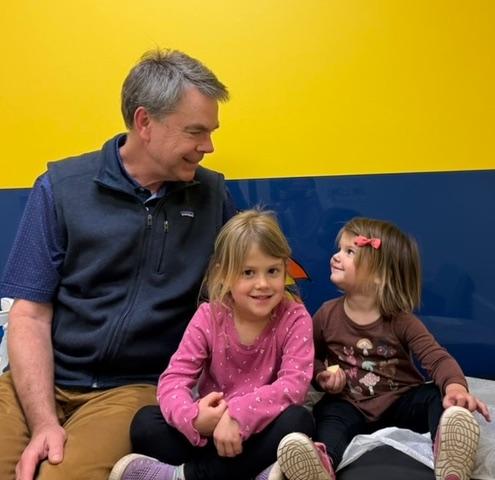
One of the most rewarding aspects of being a pediatrician for 35 years has been watching so many children grow from babies to young adults. As you would expect, there is a certain percentage of those patients who have decided that they would like to become doctors or another type of healthcare provider. I would like to think that part of their inspiration has been the chance to interact with the medical professional students in our office. At the same time, there has been a growing expectation that prospective medical students, physician assistant students and other pre-healthcare professional students log hours shadowing patient care in various settings.
At this late stage of my career, it has been a pleasure to see several of my former patients go through the process of getting their college degrees, accumulating the necessary hours of volunteer work, shadowing hours, medical research, and participation in other activities that have led to successful admission. A few have now completed medical school and are currently in their medical residencies. Others are now career nurse practitioners or PAs.
What will your involvement be with UK students going forward?
What I hope to do going forward is to inspire physicians and other medical professionals in the Lexington area to get more involved in helping UK students. I will be retiring from my pediatric practice in early 2028, so my time to be personally involved on the campus may be somewhat limited. I am certainly open to the idea of coming back to lecture there another time or two. I have also offered to have a limited number of well qualified pre-med students from UK come and visit my office here in Atlanta for a couple of days. These would be students whom have completed at least two years of their education at UK with very competitive GPAs.
Perhaps what I would most want to share with physicians who help run their medical practices in the Lexington area is our experience at the Children’s Medical Group with hiring pre-medical and other pre-healthcare students to become medical assistants in the office. Our medical assistants help room our patients, collect medical specimens, and help with hearing and vision exams.
When there are interesting medical cases we will try to involve them further if time permits. These medical assistants would be part-time employees during their college years, or full-time employees during gap years before beginning their formal medical training. What we have found is that these students are very intelligent and highly motivated to do a good job for us. In return, it gives them an opportunity to get a leg up on their medical training, and the hope that they will earn a strong letter of recommendation.
One other way that I hope to inspire your local physician community to copy what I call my first stethoscope program. For the last several years I have purchased a first stethoscope for long term patients of mine who have gained acceptance into medical school. They get to pick out the color scheme and have their name engraved on it. These stethoscopes can serve as daily reminders during the rigors of training that the physicians before them support their efforts.
What does the future look like for UK pre-medical professional students?
There will always be barriers to overcome. Again, as with my own experience, many of the University of Kentucky students are first- or second-generation college students who come from poor or middle-class families. Post-graduate education can be expensive for students coming from those backgrounds.
Perhaps the greatest challenges and the greatest opportunities faced by students who would like to pursue a career in a health-related field will be related to artificial intelligence. Students will need to learn how to embrace AI and learn to use AI in all phases of medicine, including disease research, diagnostics, and implementation of treatment plans. My brother, who is making AI expertise his business career, highly recommends the book “Rebooting Cancer Care” by Kentucky physician Douglas B. Flora, M.D. He tells me that this book not only talks about how AI is being used to help research and treat cancer, but how it gives an overview of AI that can help all medical professionals grasp this new aspect of their careers.